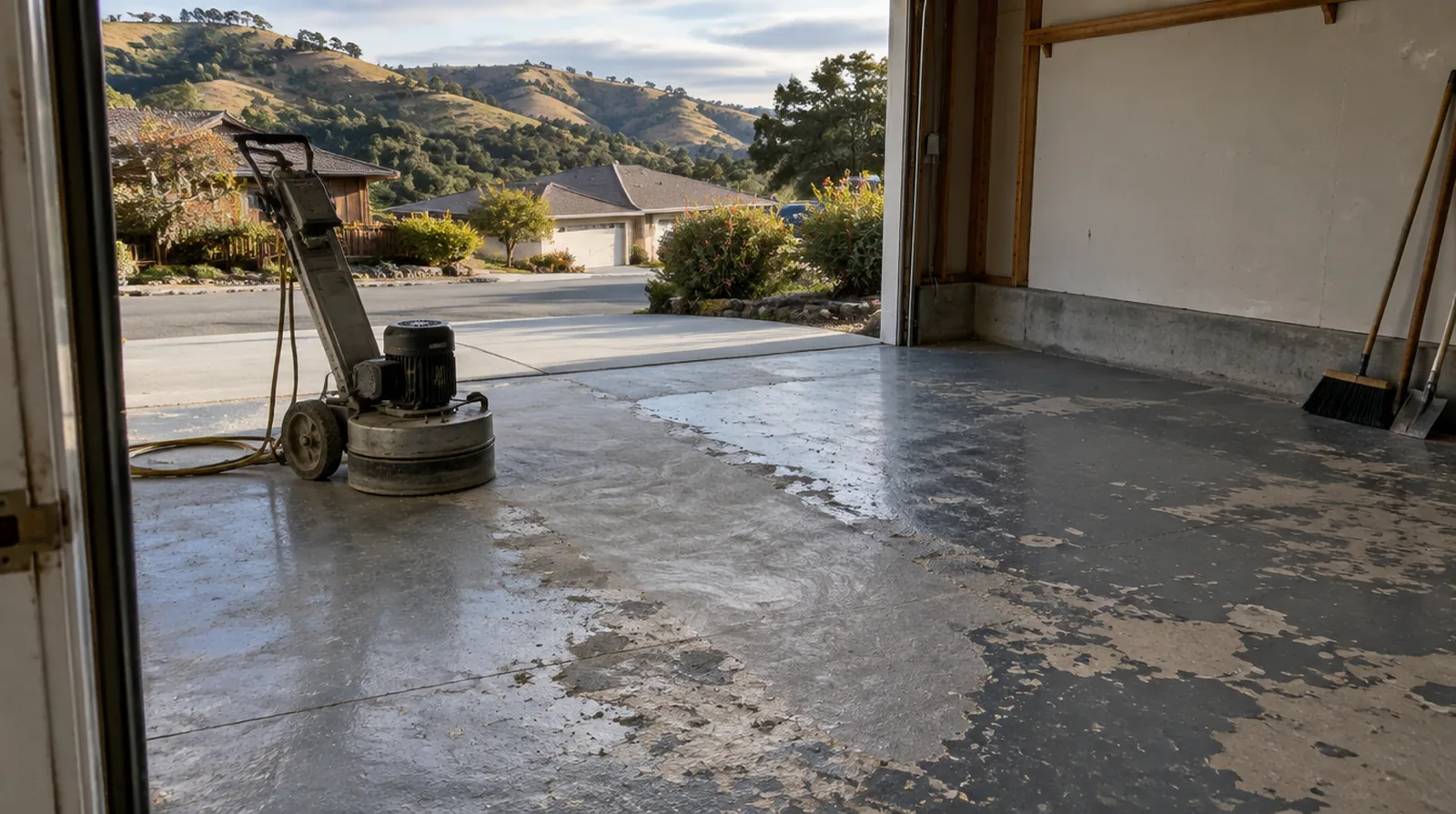
What we see
Hillside garages with peeling patches along the back wall, white powder under the coating, kits lifting where tires sit and chips from dropped tools.
Our approach
We measure moisture, check bond strength and look at where and how the coating is failing. Then we remove failed material, grind and repair the concrete and recoat with a primer chosen for the moisture level.
Patch or full redo?
Small damage can sometimes be patched. Widespread failure needs a full recoat. We will explain the options.
After the repair
Many homeowners choose a flake floor to hide repairs.
Why did my coating fail along the wall?
Most often, moisture moving through a retaining wall and slab.
Can it be prevented?
Proper testing, primer choice and drainage help a lot.
When drainage is part of the fix
If water is seeping in at the base of a retaining wall, a coating alone cannot solve it. We will point out drainage issues and suggest leaving a gap at the wall or adding a small channel so water can escape without lifting the floor.
Fixing floors in older Castro Valley garages
Epoxy floor repair in Castro Valley often involves coatings that failed along the back wall, where water from the hillside soaks into the slab. We also see coatings that peeled under hot tires, especially in garages at the bottom of steep driveways where brakes heat the tires, and floors with chips from dropped tools.
Testing and planning
We check moisture levels, test bond strength and look at drainage. If water is coming through the wall or slab, the repair plan may include a moisture-tolerant primer and advice on downspouts or grading around the house.
Repair questions
Can a small spot be fixed? Yes, on a well-bonded floor.
How long is the garage out of use? Usually a day or two.
Will a patch be visible? On flake floors it blends well. Solid colors can show some difference.
Keeping water out after a repair
Repairs last longer when water is managed. Simple fixes like extending a downspout, sealing a gap at the base of a retaining wall or regrading soil away from the garage can make a big difference. We will point out anything we notice during our visit, so the new coating is not fighting the same water that ruined the old one.
Fixing worn and damaged floors around town
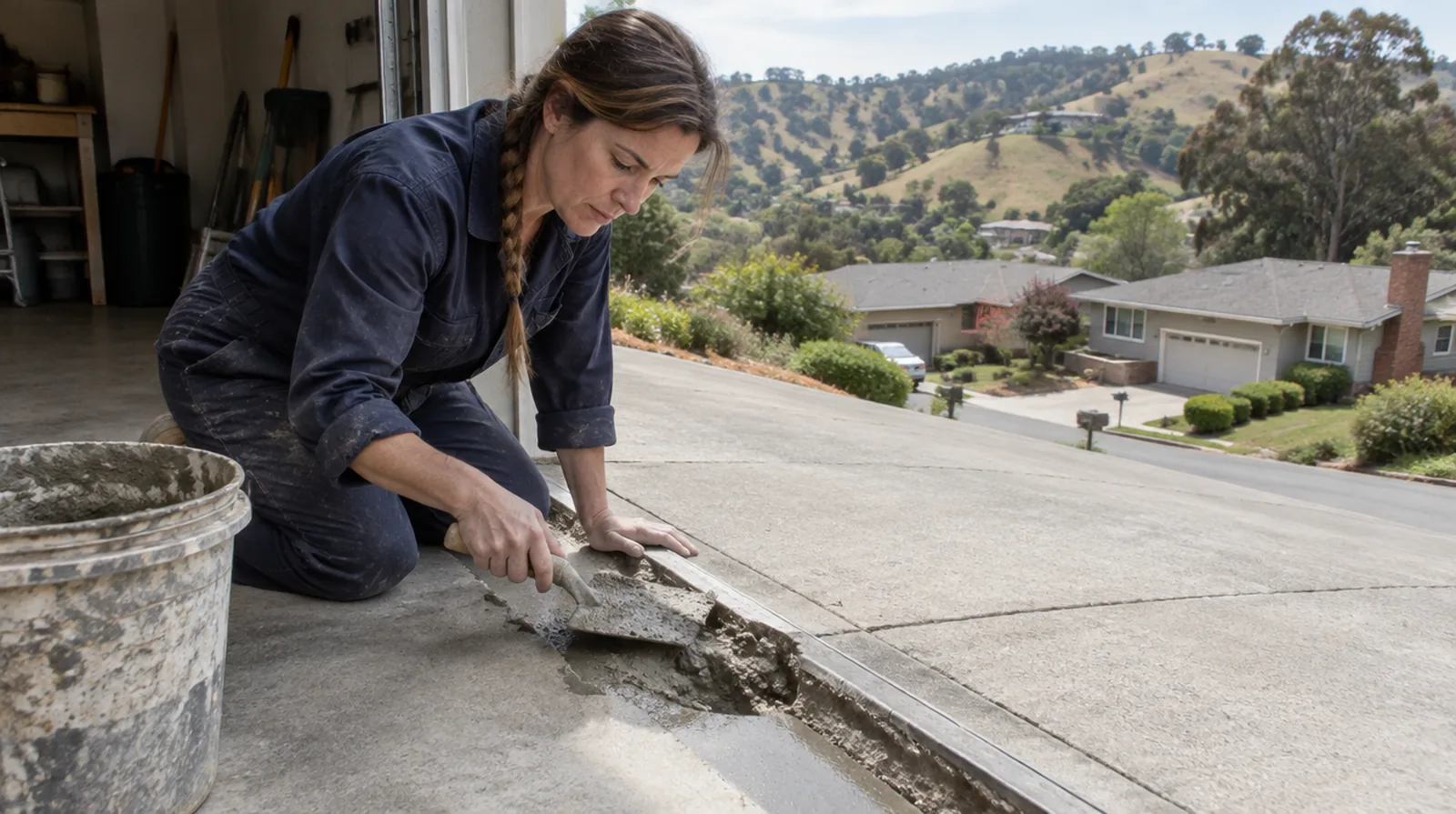
Not every floor needs a full replacement. Many Castro Valley garages and shops have coatings that are peeling in spots, chipped near the door, or stained from years of use. We look at the whole floor and recommend the least invasive repair that will last.
Threshold and edge damage
The garage door threshold is where hillside driveways put the most stress on a slab. Tires turning in at an angle chip the edge, and water runs over it every rain. We cut back loose concrete, rebuild the edge with repair mortar, and coat it so it blends with the rest of the floor.
Peeling and bubbling coatings
When a coating lifts, it is usually from poor prep, moisture in the slab, or a thin product that could not handle hot tires. We remove the failed material, find the cause, and correct it before recoating.
Cracks and settling
Hairline cracks are common and can be filled before coating. Wider or moving cracks may need a flexible filler. Where part of the slab has settled, we patch and level the low area.
Stains and discoloration
Oil and rust stains can be ground out or covered with a new coat. If an older epoxy has yellowed near the door, a UV-stable topcoat can refresh it.
When a full redo makes sense
If too much of the floor is failing, patching becomes a short-term fix. We will tell you honestly whether repair or full replacement is the better value.
Shop floors with forklift wear
In small warehouses, forklift and pallet jack wheels wear paths into a coating. We grind those lanes, rebuild them with a tougher layer, and topcoat the area so the traffic paths last longer.
Get your floor diagnosed
Call (510) 931-7265.