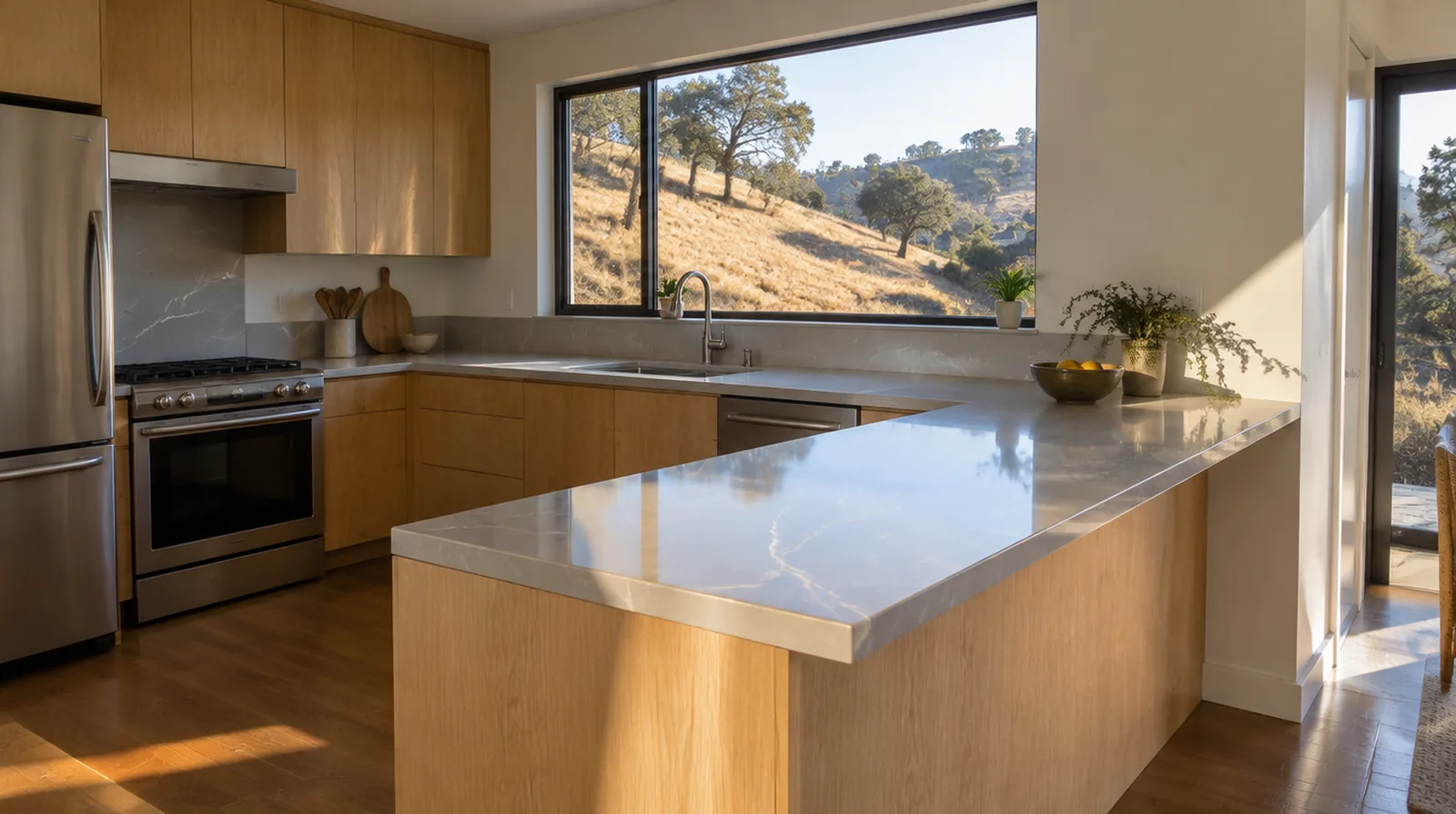
Kitchens in a hillside town
A big share of Castro Valley's houses date from the 1950s and 1960s, when the valley filled in with ranch homes and split-levels. Many still have their original tile counters, or a laminate replacement from decades ago. In Five Canyons and Palomares Hills, the houses are newer but often have builder tile and dated granite. Stone replacement in these homes can mean hauling heavy slabs up steep driveways and stairs, sometimes with a crane. Epoxy resurfacing avoids that: everything we need fits through a front door.
Popular in ADUs and rentals
Castro Valley has seen a wave of accessory dwelling units, garage conversions and in-law studios since California loosened ADU rules. Those small kitchens need counters that look good, cost sensibly and stand up to tenants. A solid color or simple stone-look epoxy over plywood or existing laminate does all three. Landlords also use resurfacing to refresh units between tenants without a full remodel.
Finishes
- Veined white and gray for a marble feel without the upkeep of real marble.
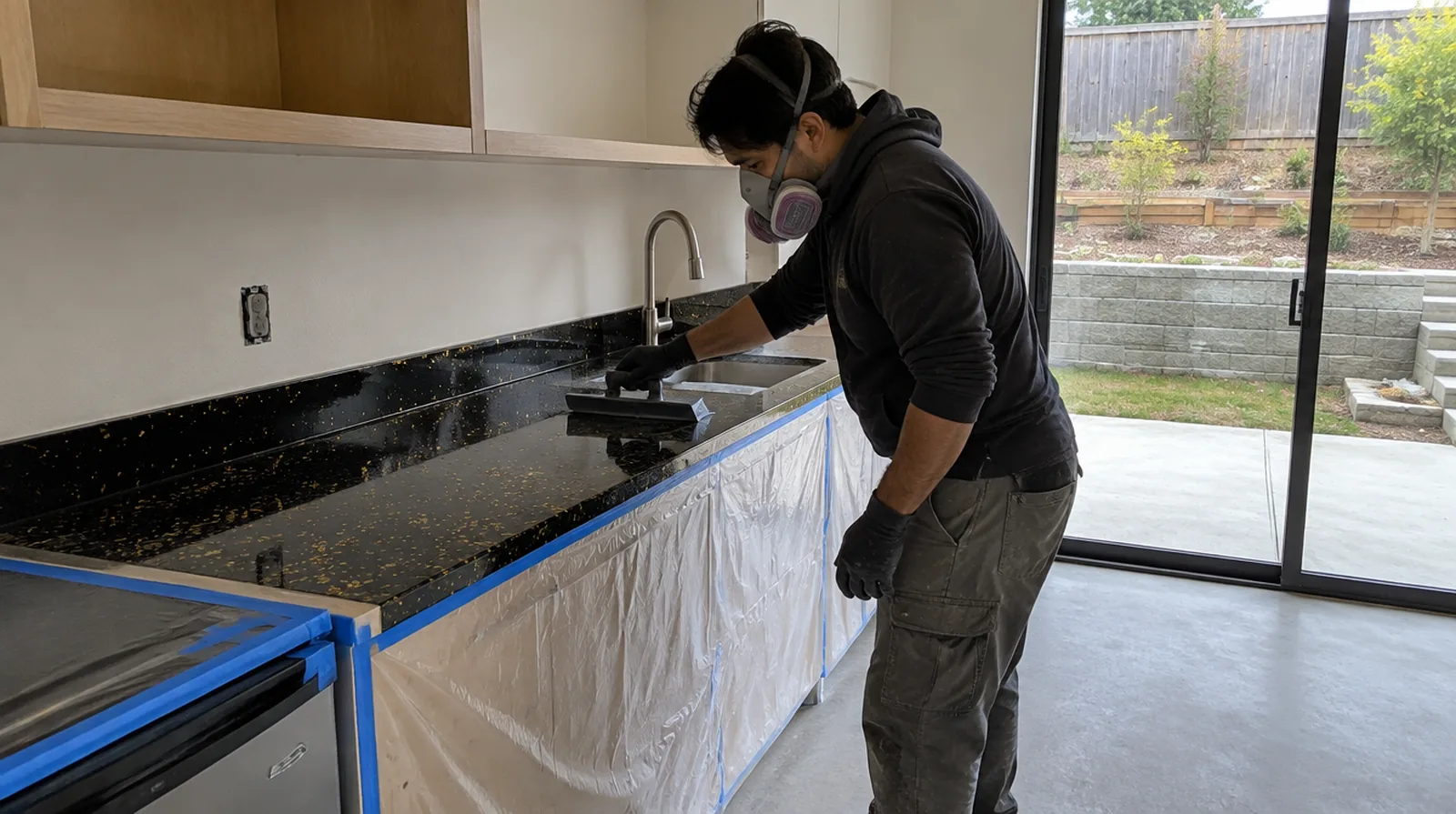
- Deep black with flecks for a dramatic island or wet bar.
- Warm stone tones that work with oak cabinets from the 1970s and 1980s.
- Metallic swirls for bars, desks and statement pieces.
What happens on site
First we make sure the old surface is sound. Cracked or loose tiles are reset, and grout lines are filled flush so they do not telegraph through the finish. The kitchen is draped in plastic and the room is ventilated. Next comes sanding and a bonding primer, then the color layers, where the pattern is created by hand, and finally a clear flood coat that self-levels into a glass-smooth surface. Edges get special attention so the front lip is clean and even.
Plan on three to four days total, including curing. You can usually set light items on the counter after a day, but heavy use should wait a week.
East Bay weather and curing
Castro Valley runs warmer in summer than the bayside towns, and winter mornings can be cold and damp, with fog drifting over the ridge from the bay. Epoxy likes stable conditions in the mid-60s to mid-70s. In summer we start early and keep the house cool; in winter we ask that the heat stay on overnight. Hillside homes with drafty kitchens may need a portable heater during cure, which we bring.
Caring for epoxy
Treat an epoxy top like a fine finish. Use trivets under pots and baking dishes, cutting boards for knives and mild soap for cleaning. Avoid oven cleaner and abrasive powders. Sunlight streaming through a south window for years can shift very light colors toward yellow, so in sunny spots we often recommend mid-tone or darker finishes.
Repairs and recoating
If a top gets scratched or dulled, it does not need to be replaced. We sand the surface and pour a fresh clear coat, which restores the shine. Chips at the edge can usually be filled and blended.
Tile counters from the 1960s and 1970s
Many of Castro Valley's older homes, from the flats near the boulevard to the streets climbing toward Lake Chabot, still have original tile counters with stained grout. We level the grout lines, prime the tile and pour over it, so you get a smooth surface without breaking out tile and backer board. Nearby Hayward, San Leandro and Dublin homes often have the same setup.
Common questions
How does it compare with quartz?
Quartz is more heat- and scratch-resistant. Epoxy is seamless, less expensive and goes over your current counters.
Do you do backsplashes?
We can extend the pour up a short backsplash or coat around tile.
Is there a strong smell?
The products we use are low-odor, and we ventilate during work.
Ready to redo your counters?
Call (510) 931-7265 and we will come by, look at your counters and give you a written estimate.