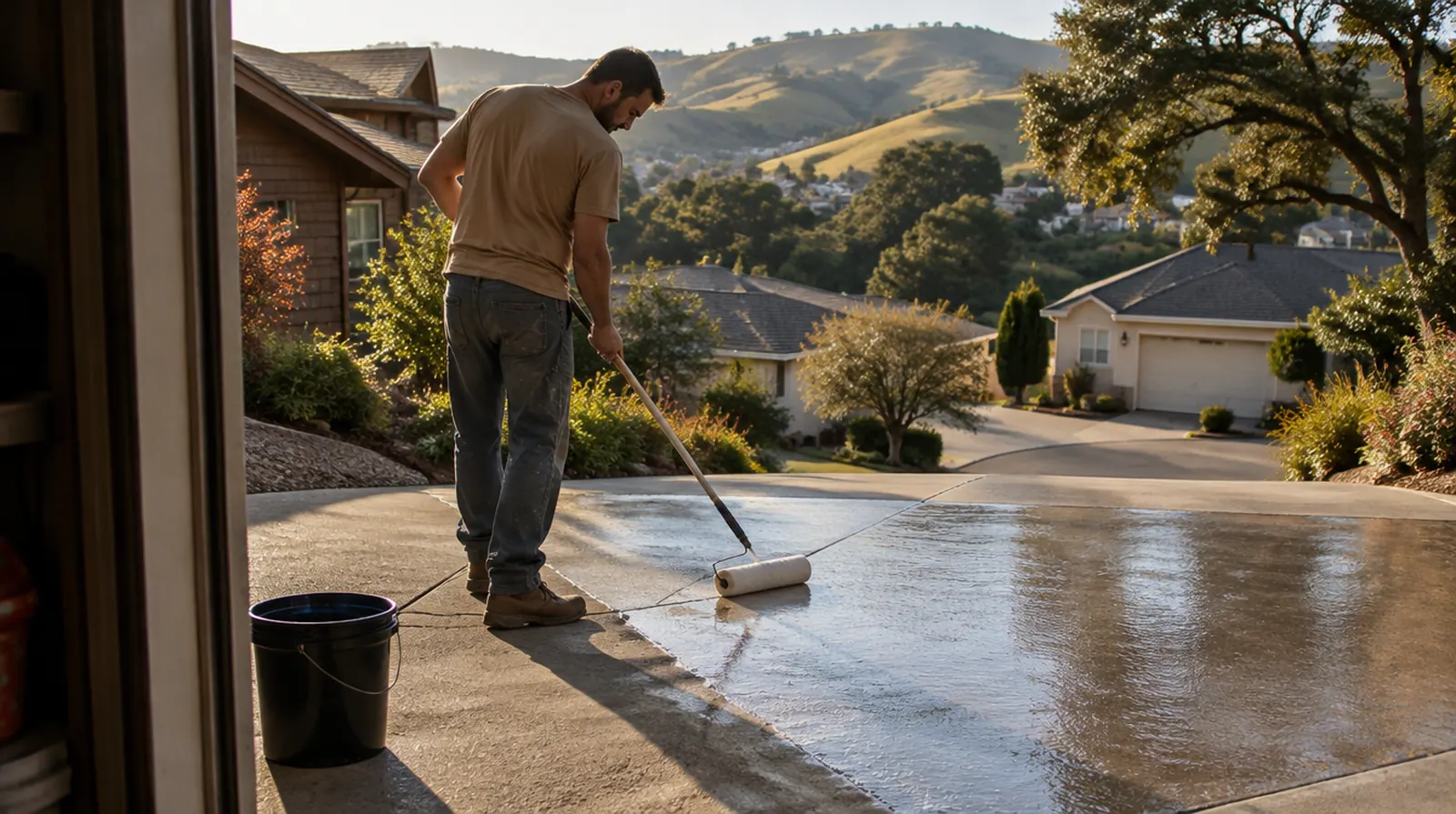
Why seal
Water running down steep driveways carries dirt and oil and soaks into bare concrete. Shaded patios grow moss. A penetrating sealer slows water absorption and makes cleaning easier.
What we seal
- Steep driveways
- Patios and steps
- Walkways and retaining wall caps
- Pool decks
Process
We clean, treat stains, let the concrete dry and apply sealer.
Will sealer make my driveway slippery?
Penetrating sealers do not change traction.
How often do I reseal?
Every few years.
Steps and walkways under oaks
Many Castro Valley lots have big oaks shading front steps and side walks. Acorns, leaves and tannins stain bare concrete dark brown, and the shade keeps it damp long after a storm. A careful cleaning followed by a breathable sealer reduces staining and slows moss, and it makes the next leaf season easier to clean up.
Driveway runoff
When a storm sends water down a long, steep driveway, it carries grit that slowly wears the surface. Sealing will not stop erosion entirely, but it helps the concrete shed water instead of soaking it up.
Concrete sealing for hillside Castro Valley homes
Winter rain runs down Castro Valley's hills and across driveways, walkways and patios, and oak trees drop leaves and tannins that stain bare concrete. Moss and algae can grow on shady steps. Concrete sealing in Castro Valley helps slabs repel water and stains and slows the growth that makes steps slick in the wet months.
Shady steps and north-facing slopes
On north-facing lots, concrete stays damp much of the winter. We clean off growth, let the slab dry, then apply a breathable penetrating sealer that will not trap moisture. A grit additive can help on steep paths.
Driveways that take brake heat and runoff
Steep driveways see hot tires and brake dust, plus water flowing down from above. Sealing makes them easier to wash and slows surface wear.
When to schedule
Late spring through early fall, when the concrete can dry out between foggy mornings. We watch the forecast and reschedule if rain is on the way.
Questions about sealing in Castro Valley
Will sealer stop moss? It slows it by keeping water out of the surface, but shady steps still need an occasional scrub.
Can you seal exposed aggregate? Yes, and it deepens the color of the stones.
Sealing driveways and walks on sloping lots
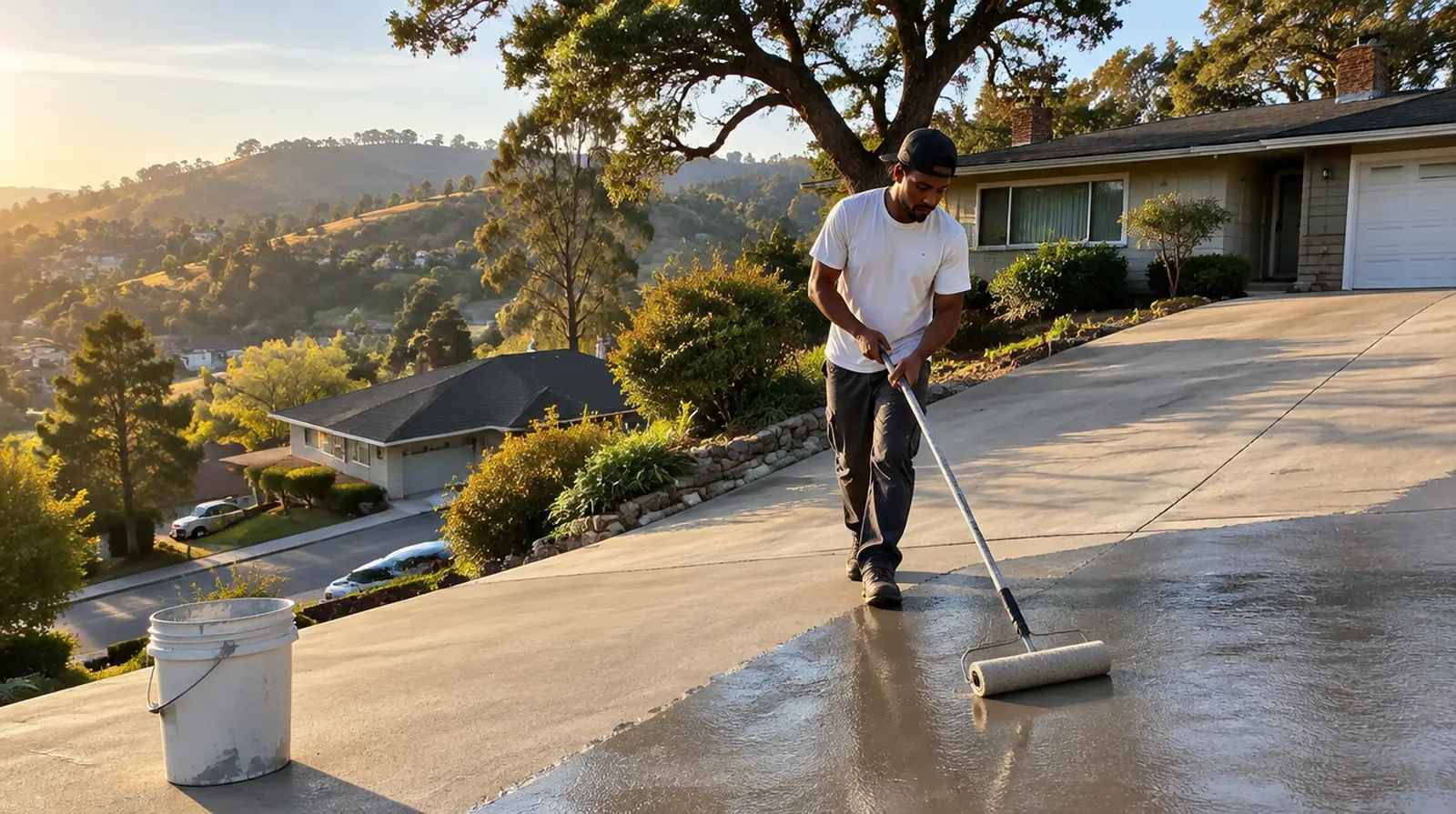
Steep driveways, front walks and patios take a lot of weather in Castro Valley. Winter rains run down them, summer sun dries them out, and leaves from oaks and eucalyptus leave stains. A sealer helps the concrete resist water, oil and staining.
Penetrating vs. topical sealers
Penetrating sealers soak into the concrete and leave a natural look with little change in traction, which suits steep driveways. Topical sealers form a film that can add color depth or a light sheen, but they can be slippery when wet unless texture is added. We recommend what fits the slope and use.
Cleaning before sealing
We clean the surface, treat oil and leaf stains, and let the concrete dry fully before applying sealer. Sealer locks in whatever is on the surface, so cleaning matters.
Patios and pool areas
Backyard patios and pool decks benefit from a sealer that resists water and pool chemicals. We pick products that suit wet, sunny areas.
How often to reseal
Most sealers need renewing every few years, depending on traffic, sun and the product used. We will tell you what to watch for so you know when it is time.
Garage floors and entries
Sealers also work inside on garage slabs and covered entries where a full coating is not wanted. A clear penetrating sealer helps keep oil drips and road grime from soaking in while leaving the plain concrete look many owners prefer.
Repairing before you seal
Cracks, spalled spots and lifted edges along a sloped driveway should be fixed first. Sealing over damage only hides it for a short time. We patch these areas, let the repairs cure, and then seal the full surface so the finish looks even from the street.
Seal your concrete
Call (510) 931-7265.