Hills, clay and the Hayward Fault
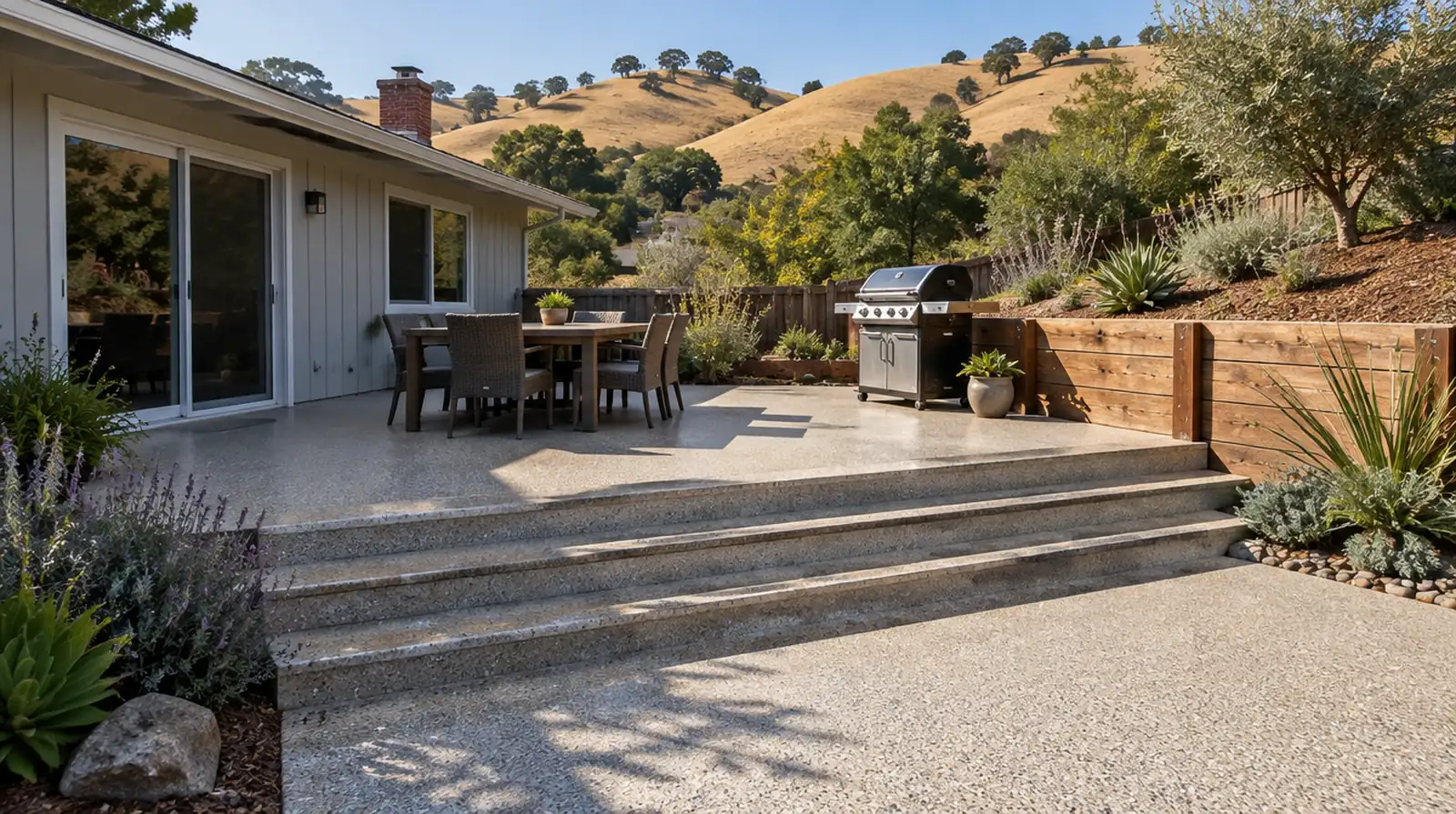
Castro Valley grew up in the 1950s and 1960s, and many of those ranch homes still have their original slab patios. Newer neighborhoods like Five Canyons and Palomares Hills were cut into steeper ground, so patios there often come in levels with steps and retaining walls. Either way, the concrete sits on the heavy clay soil that covers much of the East Bay. That clay swells in winter rain and shrinks hard in the dry months, and the slab moves with it.
The Hayward Fault runs along the west side of town, too. Small, steady ground movement and the occasional quake add to the hairline cracks most patios here already have. A good coating plan starts by deciding which cracks are stable and which ones are still moving.
What we put down
A patio coating is a thin, bonded finish over sound concrete. We prepare the surface, repair it, then apply a pigmented base, a broadcast of decorative flakes or a texture, and a UV-stable polyaspartic topcoat. Indoor epoxy does not belong outside in California sun. It yellows and chalks. The systems we use outdoors hold their color and stay flexible enough for temperature swings between a foggy morning and a 90-degree afternoon.
The process, step by step
- Walk the yard. We look at the slope, the drains, the steps and how water leaves the patio in a winter storm.
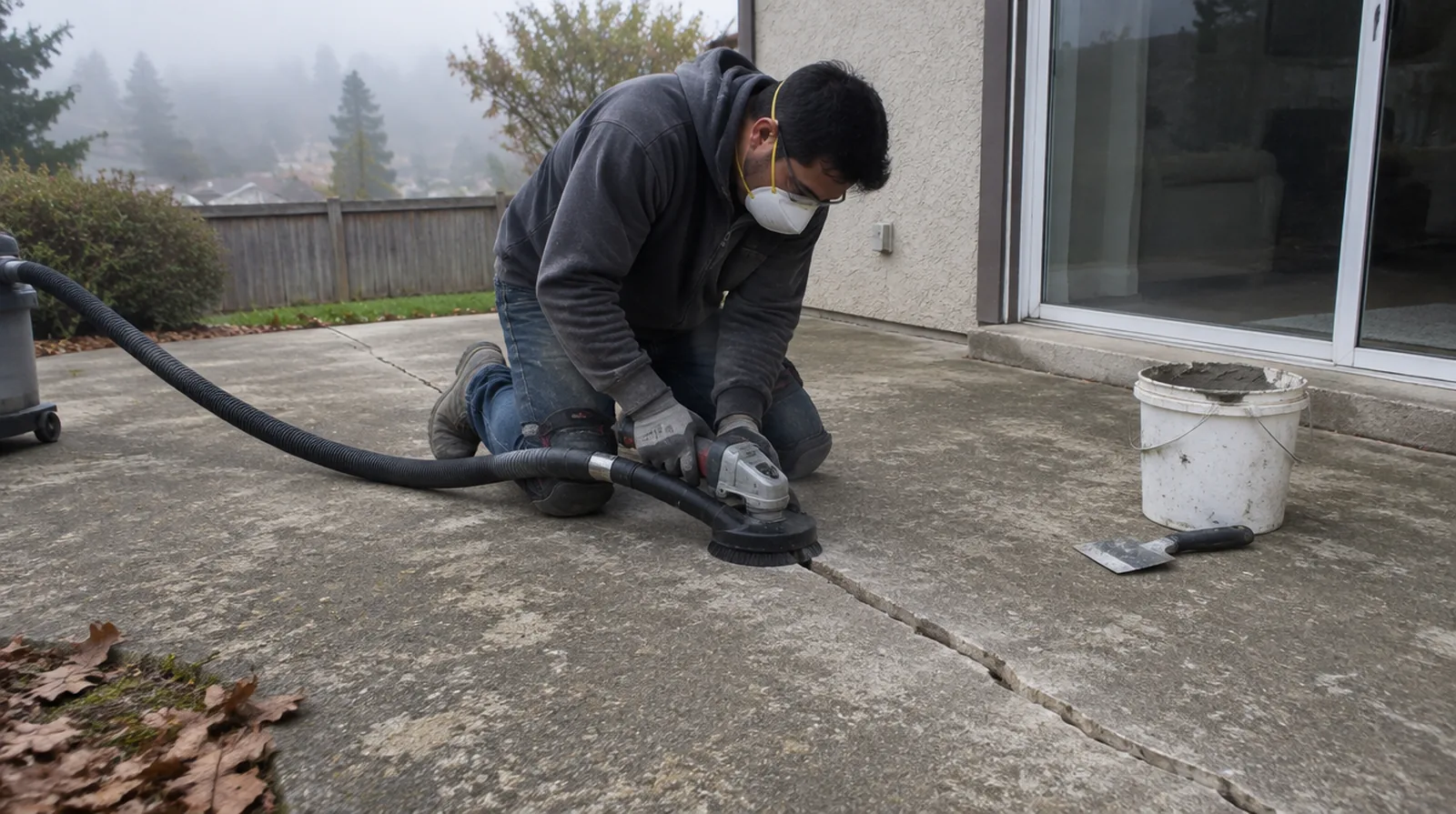
- Grind the surface. Diamond grinding removes old paint, sealer and stains and opens the concrete so the coating grips.
- Repair. We open and fill stable cracks, patch spalls and chips, and treat control joints. Active cracks get a flexible filler and may be honored as a joint so the coating does not tear.
- Color and texture. Base coat, flakes or texture, then a clear topcoat with a fine grit for traction.
- Cure. Light foot traffic the next day, furniture after about two days.
Steps, landings and tight spots
Stepped patios are where coatings earn their keep. Edges of steps get the most wear and are the easiest place to slip, so we pay attention to the nosing and add extra grit there. Narrow side yards and landings outside sliding doors get the same system, so the whole space matches. If your driveway also needs help, our driveway coating uses a heavier build made for tires.
Oaks, leaves and shade
Coast live oaks are a big part of Castro Valley's character, and they drop leaves and acorns year-round. Tannins from wet leaves leave brown stains on bare concrete. A sealed, coated surface lets those stains rinse off. In shady corners where moss and mildew grow during the rainy months, the coating keeps water from soaking in, so the area dries faster.
Colors that suit the hills
Lighter grays, warm tans and blended flakes work well here. They stay cooler on a hot August day, hide dust and dry leaves, and suit both stucco ranch homes and newer hillside houses. Darker colors look dramatic but heat up in full sun, which matters if you walk barefoot or have kids and dogs outside.
Best time of year
The dry season, roughly May through October, is ideal. We avoid coating when rain is likely within a day, and we work around morning fog by starting once the slab has dried. Winter jobs are possible in a dry stretch, but we watch the forecast closely.
Care
Sweep or blow off leaves, rinse with a hose and wash with mild soap. Use pads under metal furniture. If you want plain concrete protected without color, ask about concrete sealing. For pools, see our pool deck coating.
Common questions
Will the cracks come back? Stable cracks stay hidden. Cracks that keep moving with the clay can show again, and we tell you which ones before we start.
Can you coat around a spa or fire pit? Yes. We detail the edges around spa pads, gas lines and built-in fire features and choose a topcoat suited to the heat and water each one brings.
Do you work nearby? Yes, including San Leandro, Hayward, Dublin, San Ramon and the unincorporated hill neighborhoods.
Talk to us about your patio
Call (510) 931-7265. We will check the cracks and the slope of the slab and send a clear written quote.